
Reading Gion history in the streets
Gion history begins with the relationship between the neighbourhood and Yasaka Shrine. Gion developed in front of the shrine in eastern Kyoto, with tea houses and entertainment becoming part of its identity. Today the area brings together religious visits, restaurants, shops and the working culture of geiko and maiko. Looking at these elements together gives a more useful introduction than treating the whole district as a single preserved monument.
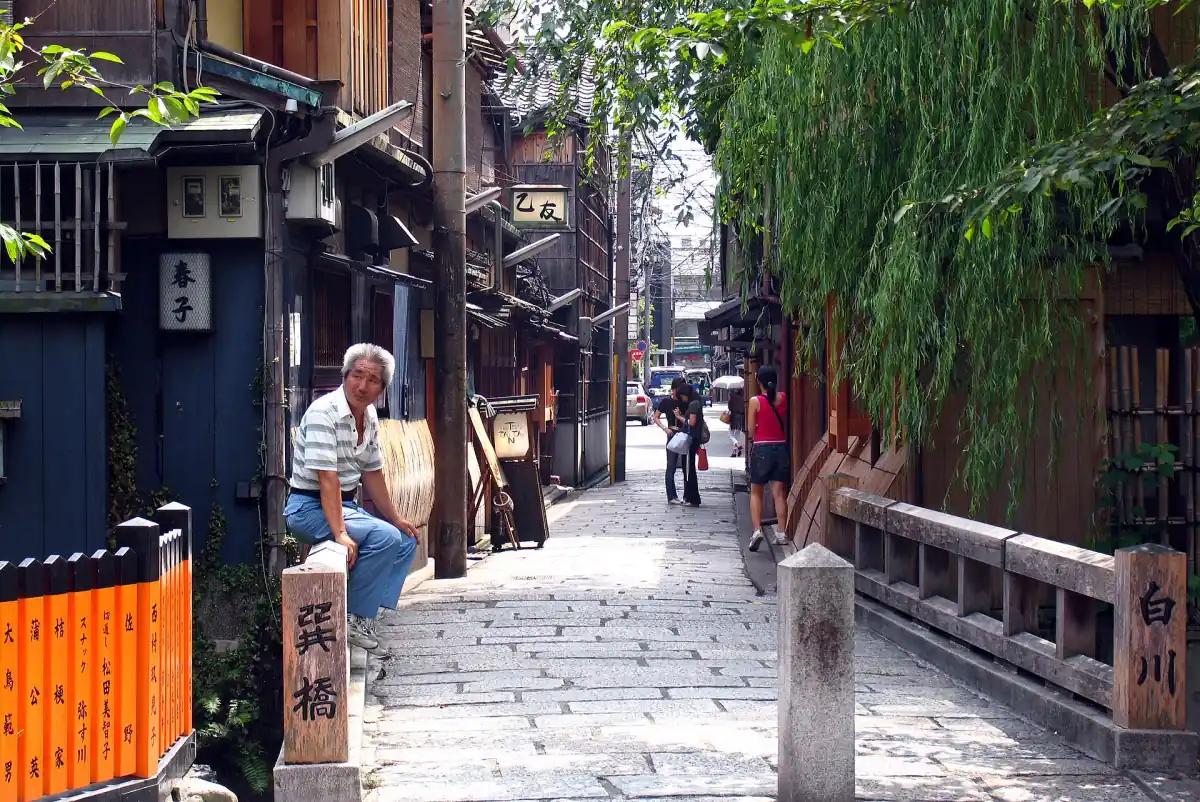
The streets contain different historical layers. Shinbashi's development as a tea-house area is associated with 1712 in the city's conservation plan, published in 2021; that date belongs to the smaller area. It should not be used as the foundation year of all Gion. A walk through Hanamikoji and Shirakawa provides a way to compare streetscapes, while Yasaka Shrine anchors the neighbourhood's religious setting.
History and culture walks
Choose historical explanations, a walk with a snack or the optional kimono plan.
Hand-picked tours, booked through Viator. Prices are indicative starting prices in US dollars (as of October 2026). Tap a tour for live availability and the current price in your currency.
Gion culture walk
- Walking tour
- Kyoto snack
The walk is in English; the meeting instructions request WhatsApp for contact.
Check availability →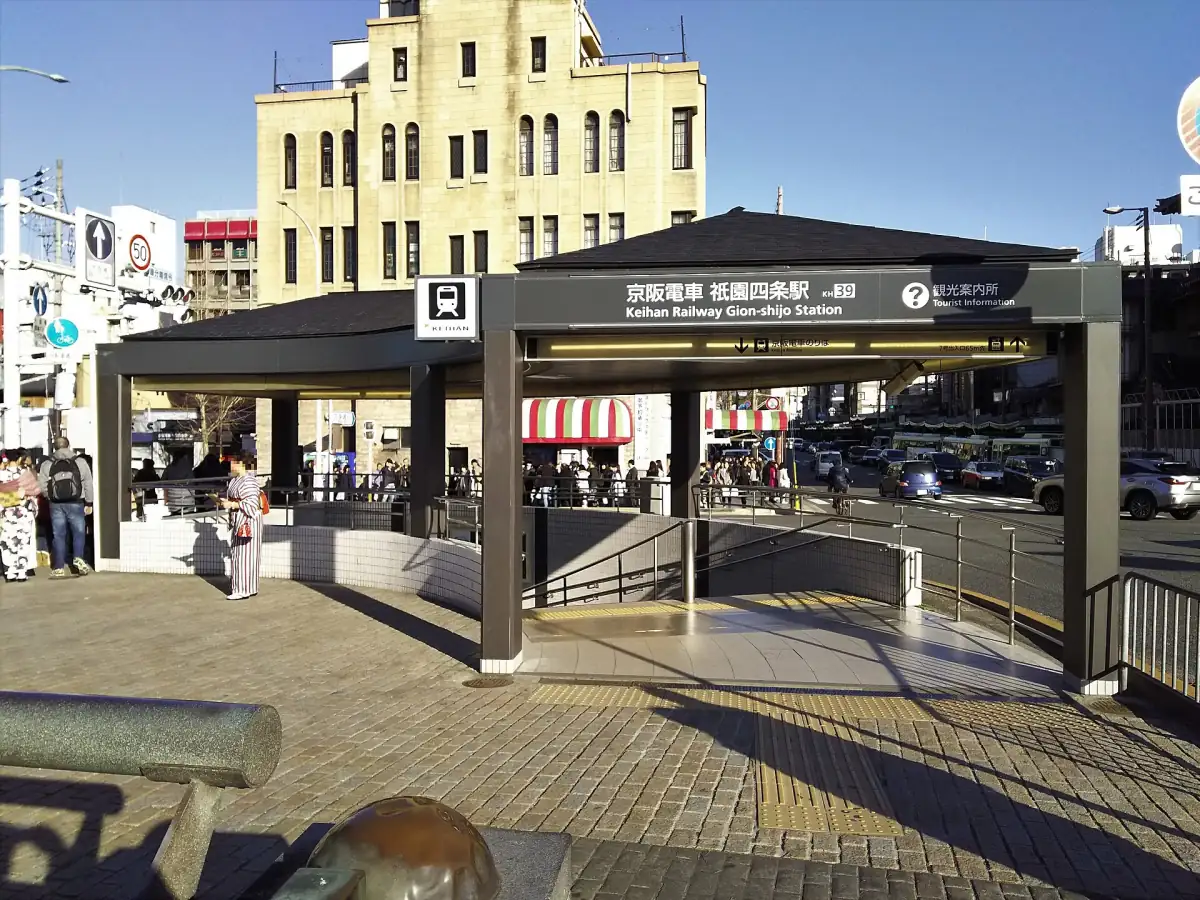
Gion walk with kimono option
- Local guide
- Guided walk of Gion
Kimono is included only with the kimono plan. Check the meeting place and time for your option.
Check availability →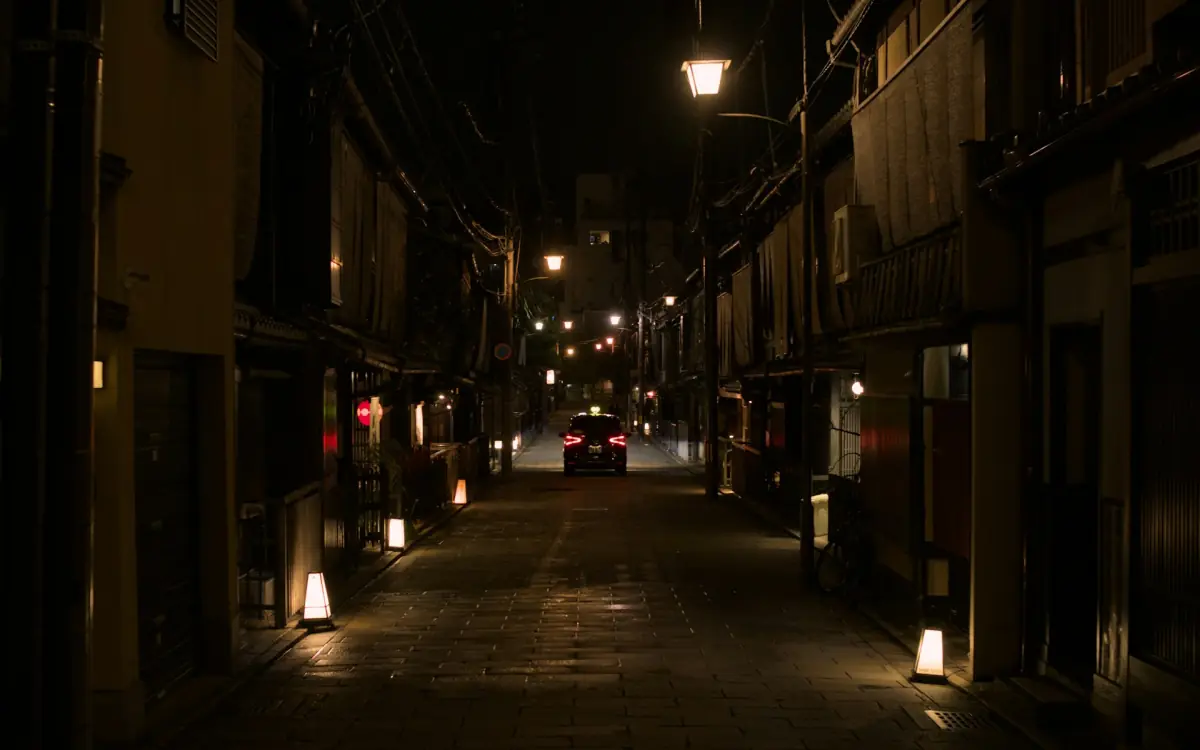
Gion history and culture
- Historical and Cultural explanations
The experience includes historical and cultural explanations.
Check availability →Cultural walks through Gion’s history
Choose a historical introduction, a guided district walk with a kimono option or a longer walk with an English-speaking guide and a Kyoto snack.
Architecture and historic buildings
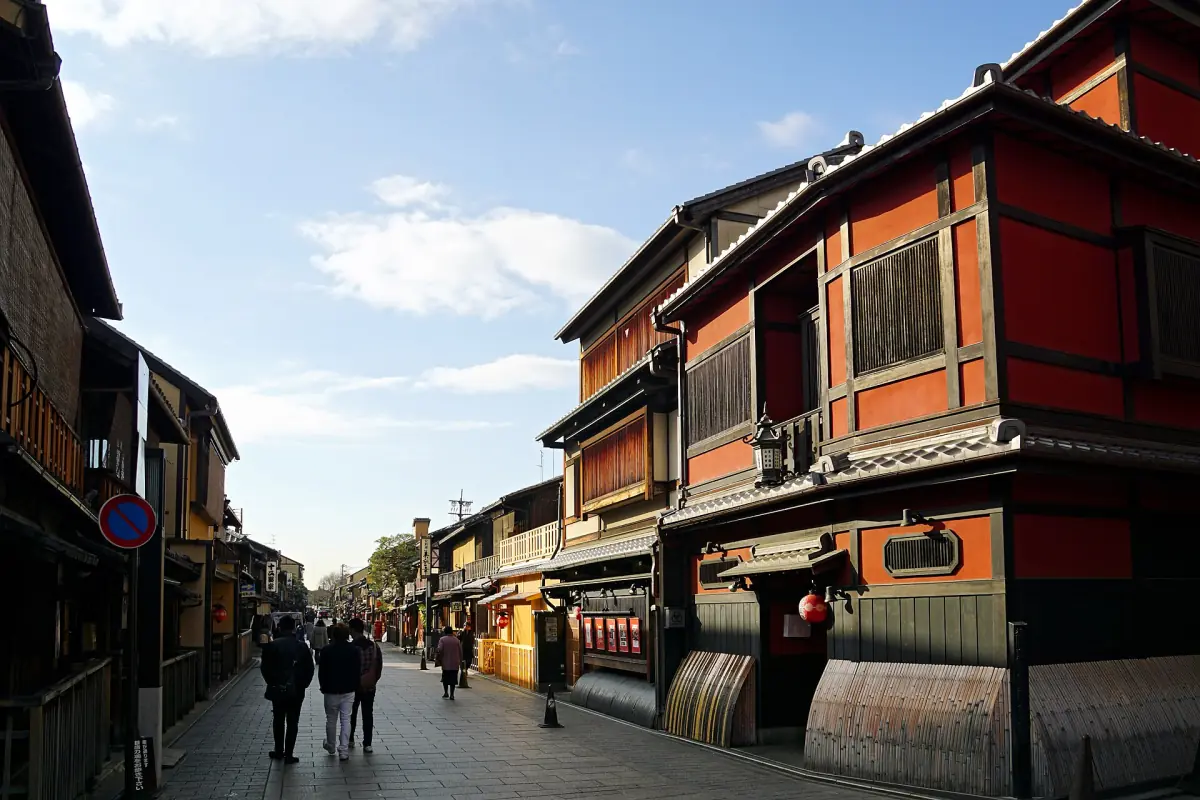
The conservation plan describes machiya largely from the later Edo and early Meiji periods, including two-storey tea-house forms. Wooden lattice fronts, stone paving, trees and the Shirakawa canal combine to make the streetscape. The effect comes from the relationship between buildings and the public route, so it is worth looking at a whole frontage rather than only searching for an isolated landmark.
Shinbashi has street-facing facades, while along Shirakawa the rear faces of tea houses also turn towards the water. That distinction helps explain why a canal view feels different from a street of entrances and shopfronts. Observe from permitted paths and leave doors, fences and lanterns untouched. A building's historical interest does not turn its threshold into a public viewing platform.
Yasaka and the temple setting
Yasaka's own history includes several origin traditions. It is more helpful to understand its continuing relationship with Gion than to force those traditions into one certain founding date. Ordinary worship is free and possible around the clock, while office services and formal prayers have separate hours. Give a shrine visit the attention of a religious space, even when it is part of a wider historical walk.
Kennin-ji adds a separate Buddhist history. Founded in 1202 with Eisai as founding abbot, it initially accommodated several Buddhist traditions before becoming a Zen monastery. Its gardens and paintings bring that history into the visit. The dragon ceiling dates to 2002, a reminder that a historic religious site can also contain much later art. The private tours guide includes a focused temple art experience.
Geiko and maiko today
Geiko are Kyoto artists working in traditional performing arts and entertainment; maiko are apprentices training towards that profession. These are living occupations. A person in a rented kimono is not necessarily a geiko or maiko, and clothing alone is an unreliable basis for identifying someone in the street. A guide can explain the terms without turning the walk into a search for working artists.
For a scheduled performance, the shows guide distinguishes booked cultural experiences from a neighbourhood stroll. The city's guidance of 2 October 2026 asks visitors not to touch, follow or photograph geiko and maiko without permission. In Tatsumi and Shinbashi, commercial photography requires prior permission from the landscape committee. Historical curiosity should go together with respect for the people using these streets today.
Pontocho has its own story
Across the Kamo River, Pontocho is a separate hanamachi. Its local association traces early tea houses to around 1712 and official permission for the geisha trade to 1859. The narrow street lies west of the river, running between the Shijo and Sanjo areas. Keeping it distinct from Gion helps make sense of the geography as well as the history.
Food and entertainment remain part of its present identity, with different categories of restaurants, cafes and bars. You can connect a visit with Gion, but each area deserves its own explanation. A cultural walk is useful for making those distinctions clear, while a food experience focuses on its own specified dishes and drinks.
Learning with a guided walk
The two-hour historical and cultural introduction meets near Yamato-bashi after Gion-Shijo exit 9. The longer cultural walk lasts 210 minutes, includes an English-speaking guide and a Kyoto snack, and meets in the area in front of the Disney Store. The two-hour guided Gion walk includes a local guide; kimono belongs to its booked kimono option, whose meeting arrangements differ from the walking-only format.
Choose the format that matches the subject you want to follow, and use the arrival guide to plan the journey to the actual meeting point. A helpful historical visit leaves you able to recognise the difference between shrine, temple, tea-house streetscape and a contemporary cultural performance.
Questions about your visit
Was all Gion founded in 1712?
The date relates to development of the Shinbashi tea-house area. Gion as a whole developed around Yasaka Shrine, and its history includes several places and traditions.
Is Pontocho another Gion street?
Pontocho is a separate hanamachi west of the Kamo River. Its local history and dining street complement a Gion visit.
Are the dragon paintings at Kennin-ji ancient?
The dragon ceiling was painted in 2002 by Koizumi Junsaku. The temple itself was founded in 1202, so the visit includes works from different periods.