
Choosing things to do in Gion
Choosing things to do in Gion starts with understanding the different places. Gion developed beside Yasaka Shrine in eastern Kyoto, on the eastern side of the Kamo River. Its teahouses, restaurants, shops and performing arts belong to a living district. A wooden facade, a place of worship and a booked dance performance call for different kinds of visits, even when they appear together on a map.
Use Hanamikoji and Shirakawa for streetscape details, Yasaka Shrine for worship and access, and Kennin-ji for gardens and temple art. Choose which interior or cultural activity matters most, then use the street walk to connect it. This gives the day a clear purpose without treating every doorway as an attraction.
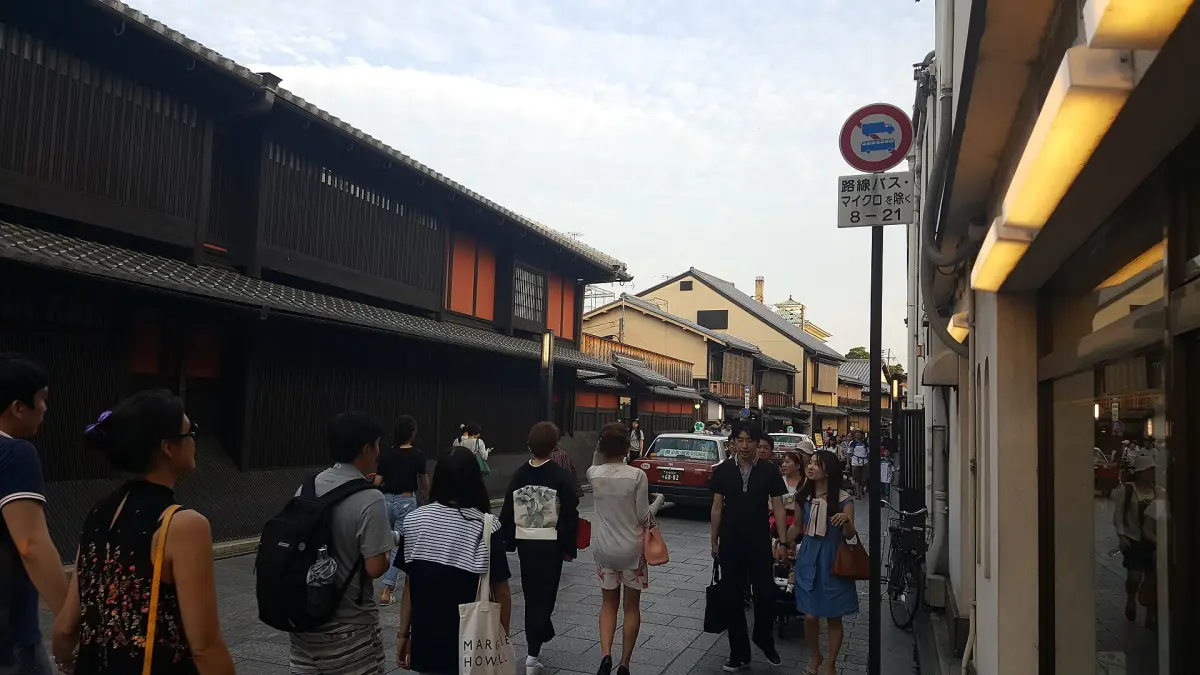
Hanamikoji and the water at Shirakawa
Hanamikoji has traditional wooden buildings, but it also carries traffic. Walk along the side and keep junctions clear rather than stepping into the road for a symmetrical photograph. The surrounding houses and businesses deserve the same consideration as the better known stretch of street. Follow signs at individual entrances and private lanes.
Shirakawa and Shinbashi offer another way to look at the district: stone paving, trees, lattice fronts and buildings beside the water. The historical streetscape includes both street-facing facades and rear teahouse fronts along the canal. Look at their relationship to the water from permitted public routes. A guided Gion and Hanamikoji walk with an English-speaking guide can add explanation to these architectural details.
Explore Gion
Walk along Hanamikoji with a guide.
Hand-picked tours, booked through Viator. Prices are indicative starting prices in US dollars (as of October 2026). Tap a tour for live availability and the current price in your currency.
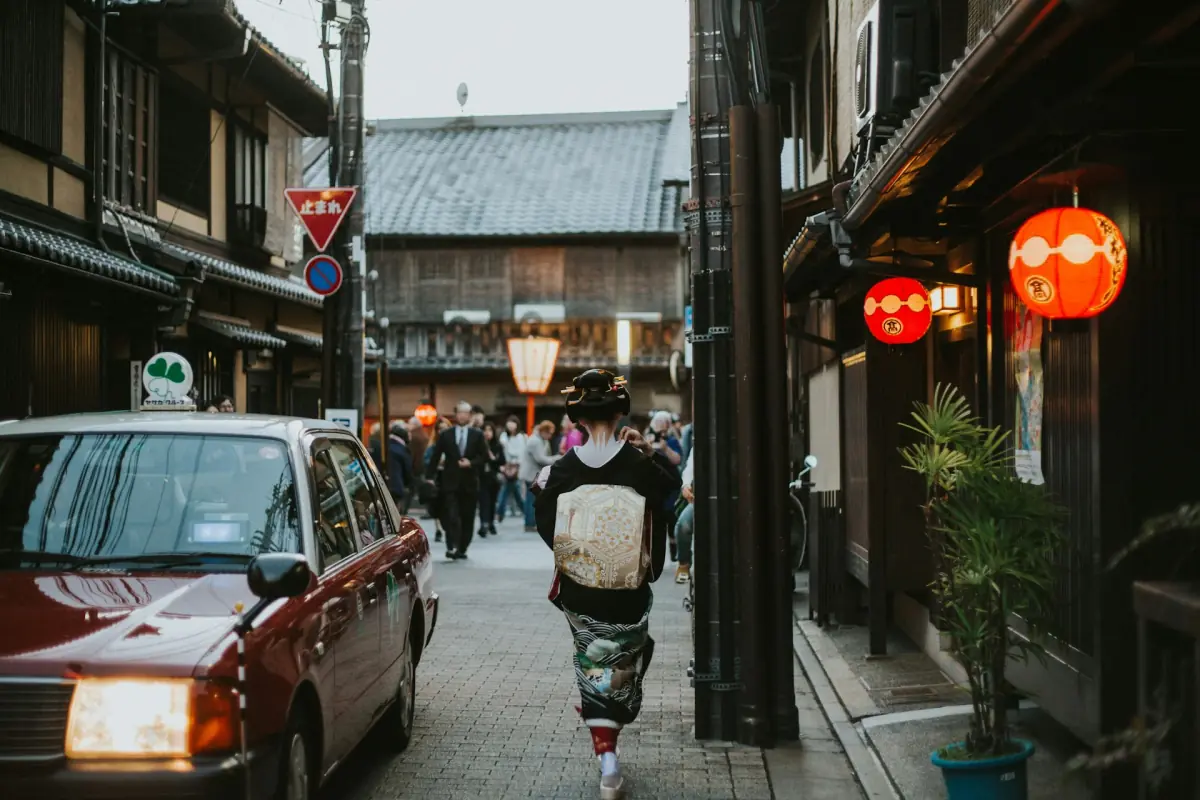
Explore Gion with an English-speaking guide
A guided Gion and Hanamikoji walk gives context to the streets and local culture while respecting private entrances.
Yasaka Shrine and Kennin-ji serve different purposes
Ordinary worship at Yasaka Shrine is free, with access for worship around the clock. Office services and formal prayers have separate daytime hours, so an evening shrine walk is a different plan from arranging a service. Give worshippers room and use the shrine page for its specific photography and wheelchair access rules.
Kennin-ji brings Zen history, dry landscape gardens and ceiling art into the same visit. It was founded in 1202; the dragon ceiling painting dates to 2002. Its visitor hours run from 10:00 to 17:00, with reception closing at 16:30. For an interior visit, build the rest of your route around that daytime window. The announced full-day closure on 15 November 2026 ends on that date.
A day route with an optional evening
A practical sequence is to arrive at Gion-Shijo, choose a daytime temple visit, walk the permitted streets around Hanamikoji and Shirakawa, and leave Yasaka worship for the part of the day that suits you. This is a planning suggestion rather than a timed itinerary. Allow room for the visit you actually want instead of adding more destinations simply because they look close.
For the evening, distinguish a cultural street walk from a booked performance. Geiko are Kyoto performing artists; maiko are trainees. A person wearing rented kimono is not necessarily either. Pontocho is a separate hanamachi west of the Kamo River, so include it deliberately as another area rather than treating it as a street inside Gion.
Kiyomizu-dera as a separate extension
If your wider eastern Kyoto plan includes Kiyomizu-dera, give it its own place in the day. Keep the Gion portion focused on the shrine, temple and streets described here. Kiyomizu-dera provides the separate destination context when available. Resist adding a temple extension at the expense of a booked performance or the closing time of an interior visit.
Prepare the walk and respect everyday life
Read how to get to Gion before choosing your arrival point. From Kyoto Station, the rail route uses the JR Nara Line to Tofukuji and Keihan onward to Gion-Shijo. Keep the onward walk and any booked meeting point distinct from the station journey.
The city guidance of 2 October 2026 asks visitors not to touch, follow or photograph geiko and maiko without permission, enter private property or obstruct traffic. Put luggage away before sightseeing and stop only where others can pass. The street scenes remain rewarding when the visit centres on architecture and cultural explanation rather than trying to intercept people at work.
Questions about your visit
Which sights work together?
Hanamikoji and Shirakawa provide the street walk, Yasaka offers shrine worship, and Kennin-ji adds a scheduled temple visit. Choose the daytime interior first and fit the other stops around it.
Does the walking tour include a district ticket?
The experience is a guided walk through Gion and Hanamikoji. Treat access restrictions at individual streets and venues separately, and keep private entrances clear.
Can I photograph maiko in the street?
Obtain permission before taking a photograph. The city guidance of 2 October 2026 also asks visitors not to follow or touch geiko and maiko.